
Have you ever wondered how a simple store surface can transform into a powerful display that boosts sales and cuts clutter?
We help Alabama and Mississippi businesses create attractive, organized retail space using American-made panels and compatible accessories. Since 1977 we have offered fair pricing, fast damage-free delivery, and hands-on support from our Birmingham address at 6808 Oporto Madrid Boulevard.
Our approach blends practical installation guidance and product quality. Acoustic panels use felt backing to reduce echo and add warmth. MDF cores with real veneers resist warping and clean easily with a damp cloth.
Expect clear steps: planning, choosing panels, mapping shelf placement, and safe installation. We explain adhesive, screw, and hybrid methods so you match your project needs. Call us at (205) 567-1627 or email almsswdepot@outlook.com for personalized support and honest reviews.
Key Takeaways
- We provide USA-made solutions and local service across Alabama and Mississippi.
- Felt-backed panels improve acoustics and create a calmer shopping environment.
- MDF cores with real veneers offer durability and easy maintenance.
- Installation options include adhesive-only, screw-only, and hybrid methods.
- Our team offers step-by-step guidance and fast, damage-free delivery.
- Contact us for tailored recommendations and transparent pricing.
Why MDF slat wall with shelves is the smart retail upgrade today
Upgrading to a structured display surface brings immediate gains in presentation, acoustics, and space use. With over 48 years of experience, we guide retailers and homeowners across Alabama and Mississippi to choose USA-made panels that balance form, function, and fair pricing.
Better customer experience: Felt-backed acoustic panels reduce echo and sharpen speech intelligibility so staff and shoppers hear each other clearly. This small change improves comfort and can lengthen browsing time.
Flexible merchandising: A modular framework lets you move accessories and add a new shelf or hook in minutes. That agility supports seasonal promotions without costly rebuilds.
- Maximize vertical space to free floors and open sightlines.
- Choose finishes from natural veneers to modern tones to match your style.
- Lower total cost of ownership thanks to durable panels and quick changeovers.
We make the project manageable. Panels cut to size, adhesive or screw installation options, and local support ensure reliable results. Call or email us if you need help selecting the right setup for your room and brand.

Benefits and use cases for retail and home spaces
Well-chosen panels change how a shop or home feels — quieter, neater, and easier to refresh for each season.
Acoustic benefits from felt backing
Felt backing on our wall panels absorbs reflected sound and cuts noise fatigue. That means staff talk and music sound clearer without raising volume.
Quieter stores help customers stay longer and make buying decisions. In homes, felt-backed panels tame echoes in media rooms and busy entryways.
Display versatility for seasonal merchandising and decor
Modular slat systems let you move a shelf or hook in minutes. Swap featured items at eye level, create seasonal displays, or refresh décor for a new campaign.
These panels trim to fit alcoves, columns, and odd corners so displays look custom even in older buildings.
Durable MDF core with real wood veneers
MDF cores with real veneers resist warping and deliver straight, repeatable installs. That stability supports heavier loads and keeps finish lines clean over time.
- Retail examples: slat wall shelves holding featured items and hooks for accessories.
- Home uses: entry storage for bags and hats, media walls for decor and sound control.
- Installation remains approachable for DIYers and solid enough for high-traffic retail.
We proudly serve retail and residential customers across Alabama and Mississippi with USA-made products and straightforward guidance on load, finish, and accessory choices.
Planning your project: space, load, and style considerations
A clear plan for placement and load will save time and keep your install safe and tidy. Start by measuring the full wall and any adjacent returns, then mark a level datum line to guide alignment across the span.
Measuring and mapping placement with a level
Mark a single, level baseline that runs the full width. Use a stud finder and wire detector before you mark anchor points.
Map accessory locations on paper or use tape on the surface first. This step validates reach heights, sightlines, and spacing before any cutting or drilling.
Choosing finish, panel sizes, and accessory mix
Select finishes that suit store lighting and brand style—from lighter veneers that open space to darker tones that highlight products. Plan shelf sizes and bracket types to match expected loads and keep even distribution across pieces.
Stud location, wire detection, and safe drilling zones
Find studs and mark them clearly. Run a wire detector along the area to avoid utilities and to pick strong anchor points. Prepare a cut list for each panel, accounting for outlets and HVAC returns so every panel fits cleanly.
- Basic tools: level, tape measure, pencil, square, and the right fasteners for your wall type.
- Consider traffic flow, ADA reach ranges, and aisle width when planning placement.
- Set realistic time blocks for layout, cutting, fitting, and cleanup; stage installs so priority zones go live first.
We believe in transparent guidance so you can plan cost, lead time, and safety with confidence. Contact us for local advice in Alabama and Mississippi.
Tools and materials checklist for a smooth installation
Gathering the right kit makes install day fast, safe, and stress-free. We source USA-made materials and list exactly what you need so buying is quick and cost-effective.
Essential tools and safety gear
Tools: tape measure, spirit level, drill and proper bit set, stud/wire detector, countersink, and a sharp handsaw or track saw.
Protective gear: eye protection, dust mask, gloves, and drop cloths to keep floors and product safe.
Core materials and accessories
Core materials include panels, adhesive rated for interior substrates, screws and anchors matched to your substrate, and color-matched fasteners where visible. We recommend felt-backed components for better acoustics near checkout and fitting rooms.
- Accessories to stage day one: shelves, hooks, and a reliable hanger solution for apparel, plus extra anchors.
- Layout supplies: painter’s tape and pencil to mark lines without damage.
- Touch-up kit: edge trim, caulk, and small color-matched repair pieces.
Pro tip: Stage pieces by zone and run a pre-start checklist with our team so the first cut only happens after all verifications. Dispose and recycle packaging to keep the site tidy.
Installing slat wall panels: adhesive, screws, or both
Start smart: prepare surfaces, dry-fit pieces, and confirm your level line before any adhesive or fasteners. Good prep prevents gaps, misalignment, and later rework.
Surface prep and layout for straight, plumb panels
Repair divots, remove dust, and snap a level reference line across the wall. Dry-fit each panel and check corner reveals so every piece sits true.
When to use construction adhesive versus screw mounting
Use adhesive-only on smooth, sound substrates. Apply beads in a zigzag and leave expansion gaps at edges. Favor screw mounting on uneven surfaces, over furring strips, or when future removal is likely.
Hybrid installs pair adhesive for full bond and a few screws at strategic points. This reduces visible fasteners while keeping panels stable.
Cutting panels to fit and finishing clean edges
Score and saw with a high-tooth blade, finish raw edges, and align factory edges where possible for seams. Pre-drill small holes with the proper bit when face-screwing and use color-matched caps to hide holes.
- Dry-fit before fastening and confirm alignment with your level.
- Check slat spacing at seams and adjust before adhesive sets.
- Protect adjacent surfaces with painter’s tape and edge guards while trimming.
Need help? We provide easy-to-follow installation guidance and support by phone or email to ensure a clean, damage-free result. Wipe veneers and felt-backed surfaces with a damp cloth for routine care.
Attaching slat wall shelves to panels using anchor systems
Secure shelf mounts start with properly placed anchors and a steady hand. We guide you through safe, repeatable steps so displays are stable and easy to reconfigure without harming panels.
Placing anchors between slats and aligning holes
Position anchor pieces where you want the shelf. Insert the anchor between slats and use a hex/Allen key to rotate it so the long legs sit behind the MDF and the pin seats into the felt backing.
Align the shelf holes over the anchor pins before mounting. This prevents stress on the panel surface and creates a clean connection point.
Securing with thumbscrews and checking level
Thread thumbscrews into the anchors and tighten evenly on both sides. Snug, then check the level and make micro-adjustments before final torque.
- Tip: Place heavier items near the panel side and space pieces evenly for balanced load.
- Add a small hanger or hooks under a shelf to cross-merchandise accessories without crowding the top surface.
- Log anchor locations in your plan so future resets are faster.
- Test by lifting gently upward to confirm anchors are fully seated.
Mounting shelves and hooks on non‑slat surfaces with long screws
We start by laying out exact placement and confirming safe zones. Mark lines with a level and pencil. Scan with a stud/wire detector so you avoid services before you drill.
Marking, drilling, and using wall plugs for solid hold
Choose a drill bit sized to the anchor. Match anchors to your materials and the expected weight. Clean dust from holes before you set plugs so anchors seat and don’t spin.
Stud vs. hollow-wall strategies and sealing in wet areas
Drive a long screw into a stud for the highest strength. When a stud is not available, use rated hollow-wall anchors or toggle bolts sized for the load.
- Space fasteners by shelf length and expected weight; add a center fastener on wider spans.
- Tighten the screw firmly but avoid stripping threads or crushing facing materials.
- In bathrooms or splash zones, run a bead of silicone around penetrations to seal and protect.
- Pre-assemble pieces on the bench and document fastener locations for future steps and maintenance.
Weight ratings, shelf spacing, and safety best practices
Knowing how much each shelf can safely carry helps you plan effective, long‑lasting displays. We stand for transparency and safety, so we give clear limits and simple upkeep steps you can follow over time.
Recommended weight limits by shelf length
Typical guidance: smaller ~359 mm up to ~5 kg, medium ~519 mm up to ~15 kg, larger ~759 mm up to ~25 kg. Always align anchors and manufacturer guidance before loading.
Even load distribution and periodic fastener checks
Place heavier items toward the back near the panels to reduce leverage on anchors and slats. Add anchors or brackets as length and expected weight grow.
- Space shelves vertically for reach and to avoid bump hazards.
- Schedule checks at set intervals: tighten hardware, inspect panels around fastener points, and record findings.
- Test-load new configurations slowly, document product weights and rotate pieces safely.
When in doubt: step up to stud-backed fastening or extra support brackets for unusually heavy merchandise, and train staff to respect posted capacity limits.
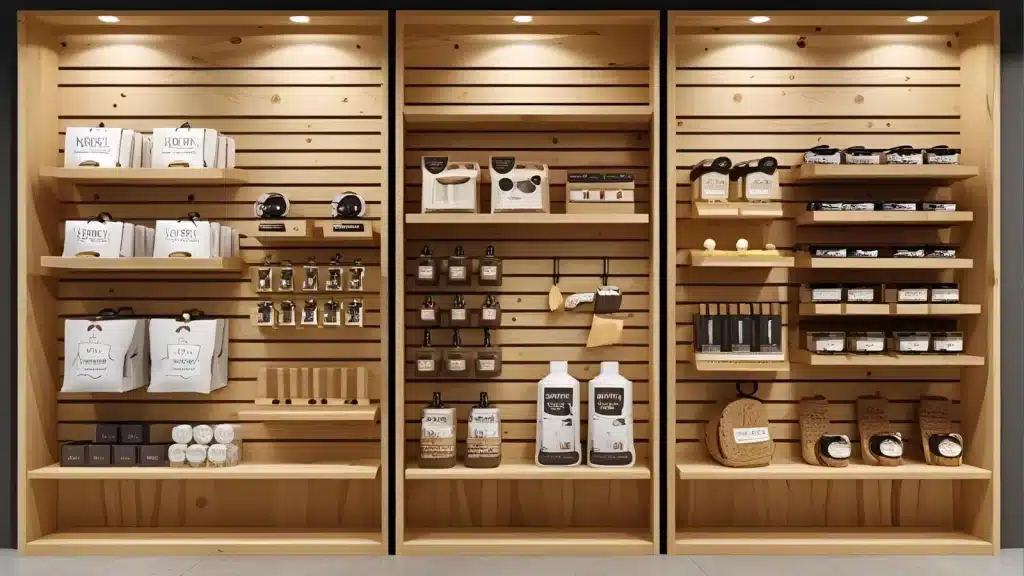
Retail layout tips: maximize visibility and sales
Smart layout choices turn a run-of-the-mill display into a revenue-driving fixture. We help Alabama and Mississippi retailers map sightlines and set the eye-level strike zone for hero items.
Eye‑level zones, cross‑merchandising, and traffic flow
Place new launches and high-margin items in the strike zone to boost conversions. Use hooks under a ledge for complementary add-ons so shoppers see related pieces together.
Plan aisles to encourage natural circulation. Position high-value goods near natural pause points to increase dwell time and buyer intent.
Quick-change displays using hooks, hangers, and ledge shelves
Modular panels and accessories enable fast resets. Move hooks, rotate hangers, and swap ledge pieces in minutes to support seasonal cadence and promos.
- Map sightlines and mark placement for repeatable resets.
- Use ledge shelves for framed items or books and hooks for small add-ons.
- Keep density balanced: one hero row, one supporting row, and breathing space for style.
Pair simple analytics with staff feedback to iterate layout. Small, frequent changes preserve margin and keep displays fresh without downtime.
Finishing touches: trims, edge details, and accessories
Small finishing details make a finished display read as premium and intentional. We focus on trims, fasteners, and a curated accessory kit to keep your install neat and durable.
End caps, corner trims, and color-matched fasteners
End caps and inside/outside corner trims protect cut edges and give a seamless transition to adjacent surfaces. Measure after panels are set and cut trims to final dimensions for the best fit.
Hardware and matching options
Use color-matched screws where visible so hardware recedes and the face reads as one continuous surface. We recommend a small kit of hooks and minimal brackets that echo your finish choice.
- Align slat spacing across seams, then disguise joins with fine caulk or trim for a crisp appearance.
- Prepare side returns with consistent reveals so fixtures meet adjacent cabinetry cleanly.
- Conceal cable runs in trim channels where allowed to preserve clean sightlines around signage.
Maintenance: a light buff and a damp cloth keeps veneers looking fresh week after week. Request sample boards to compare tones under your store lighting.
Contact us for trim profiles and color-matched screws that match your panels and accessories. We’ll help you finish the job right.
Care and maintenance to keep wall panels looking new
A short, consistent cleaning routine preserves finish and performance over years. We provide an honest, practical guide that saves time and protects your investment.
Routine care is simple. Dust regularly and wipe surfaces with a damp microfiber cloth to remove smudges. Avoid abrasives and solvent-based cleaners that can mar veneers and felt backing.
- Remove items and accessories before deeper cleaning to prevent scratches.
- Spot-test any new cleaner on an inconspicuous area first.
- Address minor edge scuffs with touch-up products matched to your finish.
- Protect adjacent walls and floors during cleaning using soft pads and drop cloths.
- Inspect anchors and hardware periodically and tighten as needed.
Train staff with a short checklist to standardize care and reduce guesswork. For high-traffic zones check weekly; quieter areas can follow a monthly cadence.
Questions about humidity, temperature swings, or special surfaces? Call or email us for tailored advice.
Troubleshooting common installation issues
Troubleshooting doesn’t need to be stressful — follow practical steps to restore fit and strength fast. Below we outline simple diagnostics and fixes you can do safely on site.
Panel misalignment, gaps, and re-leveling techniques
Check the original level line first. If pieces look off, loosen fasteners in controlled steps and re-seat the panel against the datum.
Close small gaps by adjusting shims or re-sequencing adjacent panels so seams align cleanly. After each move, reconfirm the level and tighten screws evenly.
Fixing stripped anchors and loose shelves
- If anchors spin, upsize the wall plug or relocate to a stud. A backing block adds renewed holding power when solid backing is absent.
- Repair enlarged holes with a dowel-and-glue or patch filler, let cure, then re-drill smaller pilot holes for fresh thread engagement.
- Replace compromised screw hardware when threads fail, but avoid over‑torquing into weak substrate; test fit with a gentle tug.
- Use a stud/wire detector before any corrective drill work to avoid hidden obstructions and protect people and property.
- Reseat anchors correctly by rotating them with a hex key so the pin bears behind the MDF and the anchor orientation is correct.
- Stabilize a loose shelf by adding an extra anchor point or redistributing load toward the panel side to reduce leverage.
Final steps: re-check level, run a gentle tug test, and confirm all holes and fasteners are secure. If you need help, call us — we’ll walk you through the exact steps for your project and arrange field support if required.
Why choose Alabama Mississippi Slatwall Depot
We blend proven products, fast delivery, and plainspoken support to make installs run smoothly. Founded in 1977, we’ve served businesses and homeowners across Alabama and Mississippi for over 40 years.
USA-made panels, fast delivery, damage-free service
Stock in U.S. warehouses lets us ship quickly and reduce project downtime. Orders include clear installation guides so your team can install confidently. We focus on damage-free packaging and careful handling to protect every shipment.
Since 1977: trusted support across Alabama and Mississippi
Our experience shows in responsive planning, honest pricing, and hands-on help before, during, and after install. Read local reviews or call colleagues in your area to hear about our packaging care and follow-up service.
Contact and local help
- Phone: (205) 567-1627
- Email: almsswdepot@outlook.com
- Address: 6808 Oporto Madrid Boulevard, Birmingham, AL
- We prioritize USA-made panels and accessories that deliver consistent quality.
- We built our reputation on responsive service since 1977; our experience guides every step.
- We include installation materials and phone/email support so teams never feel stuck.
Read reviews or call us today. We’ll help you plan timelines, pricing, and delivery so your project finishes on schedule and on budget.
Service area, lead times, and ordering information
Fast, predictable service starts with clear measurements and a brief pre‑install call. We coordinate timelines so your team knows when materials arrive and how long set up will take.
Serving retail and residential customers across Alabama and Mississippi
We serve retail and home customers statewide. Expect responsive quotes, stocked slat wall panels, and transparent lead times tailored to your project.
In-stock panels, easy installation guides, and shipping details
Orders include clear installation guides so crews begin on delivery day. Panels arrive cuttable to fit onsite dimensions and require simple maintenance to stay like new.
- Ordering steps: confirm measurements, choose finish and accessories, select delivery window that suits your time needs.
- We discuss substrate differences for drywall, masonry, or furring so you pick the right fasteners for varied surfaces.
- Protective packaging and coordinated shipping reduce damage and speed project turnover.
- Reorders are seamless for expansion or seasonal resets, and we match finish and batch for a consistent appearance.
Conclusion
Wrap up: close your project knowing the system is built for durability, acoustic benefit, and fast reconfiguration.
We showed how mdf slat solution turns display space into flexible merchandising that stays neat and performs over time. Felt-backed panels and MDF cores with real veneers deliver lasting value, and routine care is simple with a damp cloth.
Our guide covered planning, safe anchoring, and load guidance so installs move from sketch to finished display without guesswork. We also covered shelf and long‑screw options for non-panel areas to give complete coverage across your store or home.
Ready to start? Alabama Mississippi Slatwall Depot delivers USA-made quality and local support across Alabama and Mississippi. Call (205) 567-1627 or email almsswdepot@outlook.com to begin your project.


